You're likely buying the same proxy twice
Testing IP pool overlap across 20+ residential proxy providers
Preamble
I've gathered and compared IP pools of 20+ somewhat popular providers and two things are clear: some providers are straight up selling same residential pools and many are sharing IPs to some degree. You may accidentally use the same IP twice under different providers and get the same (failed) result.
Why this matters
There's a number of things why you should care:
- IP is one of the most important things when website decides whether or not to allow you to use it;
- buying proxies from another provider may add less diversity than you expect, if any;
- pricing and service quality could be worse with the same underlying infrastructure.
Methodology
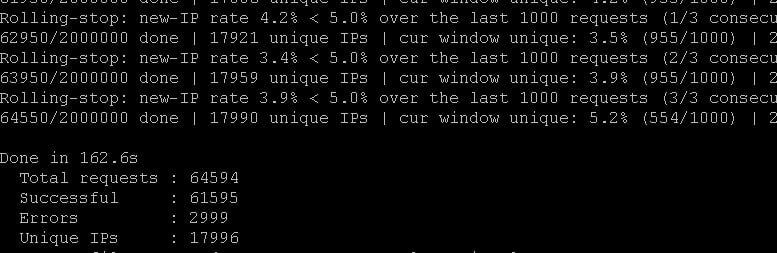
IPs were collected in roughly a day using US targeting because it's smaller and most popular country for residential proxies. I kept accessing own IP echo server until uniqueness drops below 5% on 3 consecutive 1,000 request ranges or it reached the ceiling of 2 million requests. Collected IP amount ranges from 18 to 250 thousand per provider. ASNs of IPs were gathered from maxmind free database.
After that I took a look at various values:
- raw IP overlap (% of sampled IPs from Provider A also found in Provider B's pool);
- ASN cosine similarity and subnet overlap;
- projected pool size and IP overlap using Chao-Sørensen index.
After that, I chose the same targeting, if possible, to verify any suspicions. Should be mentioned that despite using ASN, subnets and projections to find anomalies - numbers below and in the table are strictly from real IP.
Finding #1 - Fully exchangable pools
Some providers are reselling same residential IP pool and it shows. For example - cluster IpnProxy, Proxidize, Data Impulse and Ghostealth. They all have same anomaly - around 20% residential IPs have datacenter infiltration with 40401 and 400463 ASNs. This results in over 75% overlap of raw IPs and 100% adjusted to estimated pool size overlap. Other examples are Lightning Proxies, Shifter, Proxy-Seller, Nodemaven cluster with raw IP overlap varying from 71% to 97.2% or IPRoyal and Mars Proxies with 86.4% overlap.
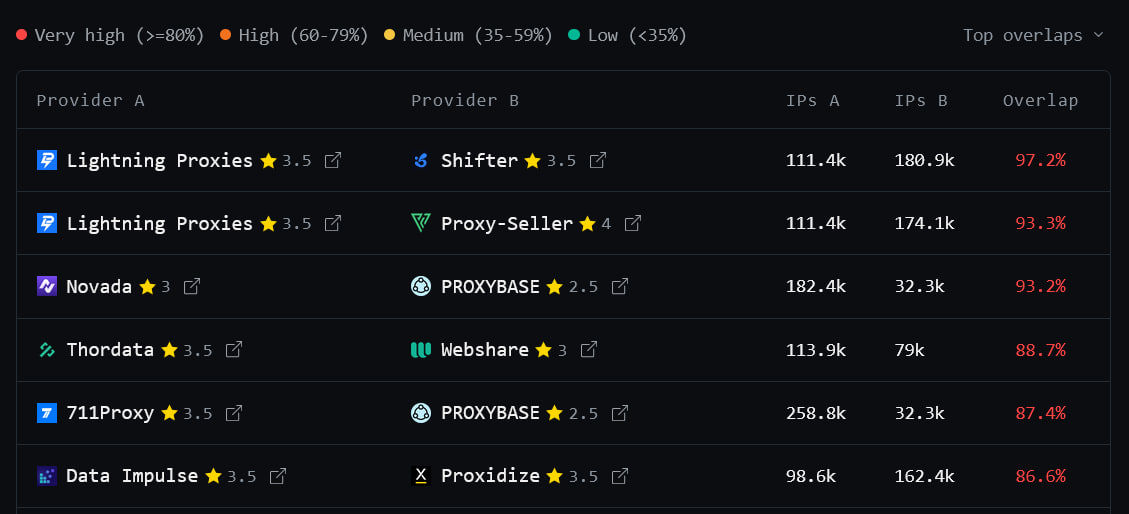
If you're targeting specific city and got banned on one service - switching to its neighbors will do virtually nothing except wasting time and money.
Finding #2 - Partial overlap is very common
Even without totally sharing IP pools - many providers still have overlaps because of methods used (multiple providers SDK in the same distributed software or people installing different proxy server software to earn more money).
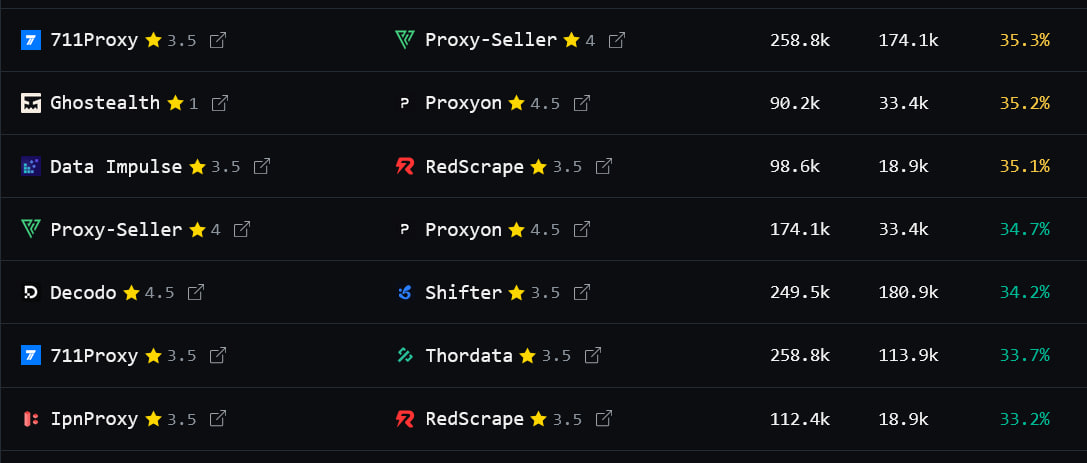
This is not inherently bad, but if Provider A has 50% overlap with Provider B (e.g. Novada and Rayobyte have 50.1%) - you may have a hard time trying to replace it for your target since effectively half of IPs will be banned. You may want to pick something with lower overlap, for example - western and eastern proxy providers often have very different distribution models and therefore different pools.
What this DOES NOT mean
Same pools doesn't always mean one provider is selling the same proxies from different websites, more often these are just resellers with no malicious intent. Sometimes, however, it does - ProxySight and Ghostealth are essentially the same thing with the latest being reskinned version of the original website, sharing API and proxy endpoints.
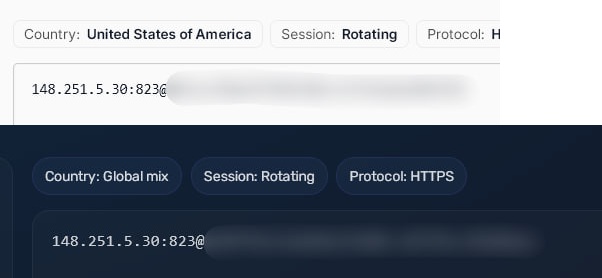
Also, provider can change its proxy sourcing or add new, this is why I'm planning to test it regularly.
What you should do with this
Be cautious and check providers beforehand at Pool Overlap page. You may be overpaying for the same proxies if buying for the first time or paying twice if you're trying to find another provider. Keep in mind that this is only a handful of providers and clusters could be way bigger - Pool Overlap page will be updated once new findings come out. Originally this website didn't have reviews or scoring, but with end product being often the same - it is service quality and prices that matter. Used IP data won't be published to not make anti-bot systems life easier, but you can find raw overlap table with all kinds of numbers at GitHub.